How AI Changed the Way I Learned at University
I started university in 2021, when COVID-19 had pushed my classroom onto a laptop screen. Like many freshmen, I was still learning how to study independently, conduct research, and figure out what was expected of me at university. At the time, I assumed that these habits would gradually become routine. What I did not expect was that, a few years later, another change would reshape the way I approached those same tasks: the arrival of ChatGPT.
Before ChatGPT
One of my freshman assignments asked us to identify the invention that had been most useful to human civilization. It sounded simple, but choosing one invention was surprisingly difficult. I started from something basic: what does a person actually need to survive? Humans can only live so long without food or water. Water seemed relatively accessible, so I began thinking about food and, more specifically, how humans had learned to preserve it. That eventually led me to fermentation, which became the subject of my assignment.
My research process at the time was fairly ordinary. I used Notion to take notes, Google Scholar to look for academic sources, and other websites to build a general understanding of the topic. I also turned to Reddit, not as a scholarly source, but because I wanted to know how ordinary people viewed the question. I asked whether fermentation deserved to be considered one of humanity's greatest inventions. The responses were debatable, but most people agreed that fermentation had played an important role in human history. In 2021, I also experimented with an early AI text-generation tool, although it was still quite limited compared with what came later. When I asked where it got its information, it pointed me toward Wikipedia, which did not exactly inspire confidence. I treated AI as a curiosity rather than something I could rely on for serious academic research.
This was also how group assignments usually began. My classmates and I would sometimes meet in a café with our laptops and start looking for something interesting rather than arriving with a fully formed topic. We might browse Britannica for historical events that had happened during a particular month in previous years or centuries, then move to news websites to see whether there was a current issue worth exploring. “What about this one?” someone would ask, turning their screen toward the group. Another person might shake their head. “Too broad. We’ll never finish it.” Then someone else would come up with another idea, and we would go back to searching. That back-and-forth could continue for a while before we finally agreed on a direction. Sometimes, the hardest part of an assignment was simply figuring out what was worth studying in the first place.
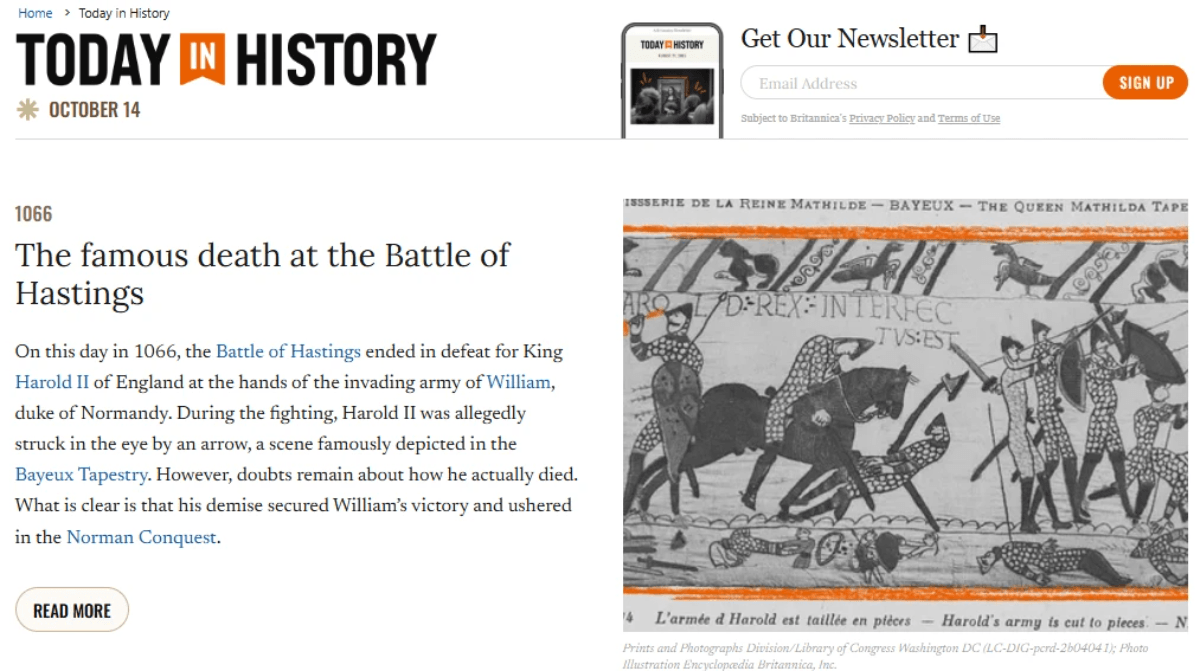
Britannica’s “On This Day” feature, which we used to discover historical events and generate ideas for assignments. Screenshot: Encyclopaedia Britannica
When ChatGPT Became Part of University Life
By late 2023, ChatGPT had become much more capable, and I started using it more seriously. One assignment I worked on examined just war theory in relation to the use of drones in the Russia-Ukraine conflict. Instead of beginning with a long list of search results and trying to determine which concepts were relevant, I could ask ChatGPT to explain just war theory, identify related material, and suggest sources that might help me understand the topic.
The difference was not that ChatGPT suddenly did the assignment for me. It gave me a starting point. I still opened the sources it suggested and read them myself, then went through the familiar process of writing, citing, analyzing, and concluding. What changed was the amount of time it took to get into that process. Rather than spending as much time figuring out where to begin, I could use AI to orient myself and then move on to the actual research.
That distinction became increasingly important as AI tools became more widely available. Like many students, I was curious about how the technology could support essays, presentations, and other coursework. In my experience, AI could provide a polished explanation or a useful starting point, but some responses remained quite general or did not fully connect with the course material and discussions we had in class. I still had to work out what was relevant, check the sources, and develop my own analysis. Our lecturers also encouraged us to treat AI as a tool to support learning, while reminding us that the thinking and work behind our assignments should remain our own.

UEF students participate in a workshop on using AI effectively in their studies. Photo: UEF
When the Process Changed
The biggest change, however, was not simply the ability to find information faster. I noticed it most clearly in group work.
Before ChatGPT became a normal part of student life, my classmates and I had to sit together and work through uncertainty. We searched different websites, compared ideas, argued about which direction was more interesting, and sometimes spent a considerable amount of time before even deciding what our assignment would be about. The process could be inefficient, but it also forced us to think together. We did not have an instant list of ten possible approaches. We had to come up with them ourselves.
After ChatGPT became part of our routine, that first stage became much easier to skip. I remember how quickly a group discussion could change once someone opened ChatGPT. Instead of sitting around asking, “What should we do this time?”, someone could type, “Give us some interesting international relations topics related to current events,” and suddenly the screen would fill with possibilities. “The first one sounds interesting,” someone might say. “But that's too broad,” another would reply. A few seconds later, ChatGPT could narrow it down into several more specific questions. “Okay, this one. Let's just look for the sources.” We could move from having no topic at all to dividing up the research in a matter of minutes.
The assignment moved faster, but the experience was different. Before, the discussion itself was often where the idea came from; now, the conversation could begin with ideas already generated for us. We were not always discovering the question together anymore because a tool could give us possible answers before we had fully worked out what we wanted to ask.
That, to me, is one of the more interesting cultural changes AI has brought to university life. It did not simply give students another way to search for information. It changed where the learning process began.
Looking Back: Before and After ChatGPT
Now that I have graduated, I can look back at my university years as a period divided by a fairly clear change. Before ChatGPT became part of everyday student life, research was often slower and more frustrating, but I remember enjoying the process of finding something interesting for myself. My classmates and I would search through articles, historical records, and news, get stuck on an idea, and sometimes end up somewhere we had not expected. There was a certain satisfaction in finally finding an argument after working our way toward it.
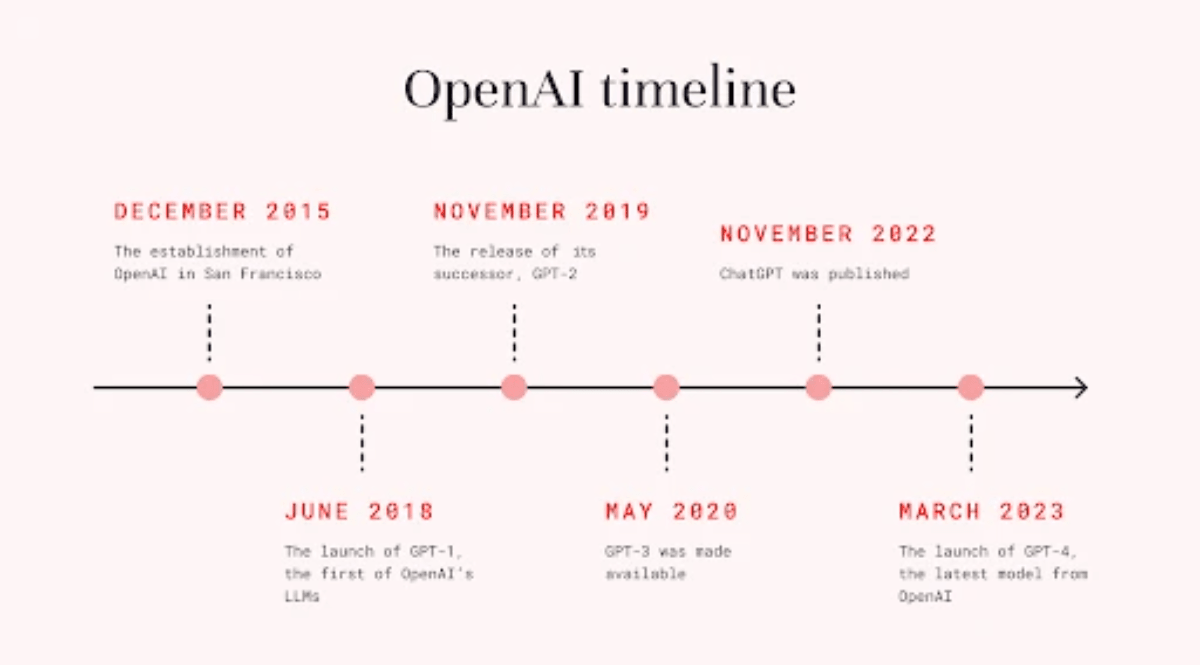
A timeline showing the development of OpenAI’s GPT models. Graphic: Monterail
After ChatGPT became part of our routine, I appreciated how much easier it was to get started. When I did not understand a concept or know which direction to take, I could ask a question and receive an explanation, several possible approaches, or suggestions for further reading within seconds. That convenience was genuinely useful, but I also became more aware of how easy it was to move past the uncertainty that had once been part of the experience.
I do not think one period was simply better than the other. I was glad to have a tool that could help me get unstuck, yet I sometimes missed the slower process of finding an idea with classmates and working out what we thought about it. I am not sure that university needs to return to the way things were before ChatGPT. I only know that, looking back, some of the most memorable parts of learning happened when we did not have an immediate answer and had to figure things out together.

Jermaine Trinh is a Vietnamese writer and international affairs professional based in Ho Chi Minh City. A graduate in International Relations from the University of Economics and Finance, his writing explores public diplomacy, cross-cultural exchange, and international cooperation in the Asia-Pacific. He has contributed to public diplomacy initiatives at the U.S. Consulate General Ho Chi Minh City, supported healthcare outreach programs with the VinaCapital Foundation, worked with international humanitarian teams through the ACTV medical mission — an annual French-Vietnamese healthcare exchange program. Jermaine is passionate about making international affairs more accessible by connecting policy, culture, and everyday experiences across the region.
Sponsored: Stand out on paper and in person
ARP Education helps students prepare for undergraduate and master's study in the United States, from choosing the right universities to building a strong holistic application and a scholarship strategy.
We also offer Public Forum debate training, 1:1 or with a partner. Students learn to research current issues, build clear arguments, and speak with confidence. Whether the goal is to build lifelong communication and critical thinking skills, prepare for competition, or get ready for interviews and university life, our training is shaped around each student.
Learn more or get in touch → ARP Education
Website: arpeducation.com | Email: info@arpeducation.com
Zalo & WhatsApp: (+84) 354 127 782