Four Things That Surprised Me About Being a University Student in Ho Chi Minh City
When Americans think about university life, the image that often comes to mind is the college experience portrayed in movies and television shows. Large football games, dormitory culture, and students spending most of their time on campus are common parts of that picture. Before starting university, those were some of the expectations I had as well. My experience as a university student in Ho Chi Minh City, however, turned out to be very different.
I studied International Relations at the University of Economics and Finance, or UEF, a private university in the city. What stood out to me most was not just the university itself, but the way student life in Ho Chi Minh City moves with the rhythm of the city. University was not a separate world. It was part of daily city life: commuting, studying in cafés, rushing between classes, meeting friends, and thinking early about internships and jobs.
University life happens beyond campus
One of the biggest differences between the American college experience I saw in movies and my own experience in Ho Chi Minh City was the role of the campus itself. Many students who grow up in Ho Chi Minh City continue living with their families while attending university and commute to class each day rather than moving into dormitories. At UEF, where I studied International Relations, student life took place in tall academic buildings in the middle of the city rather than on a large, self-contained campus. Because thousands of students shared the same buildings, class changes often meant long queues for the elevators. It was common to arrive early and still find yourself waiting with dozens of other students trying to reach classrooms on the upper floors.
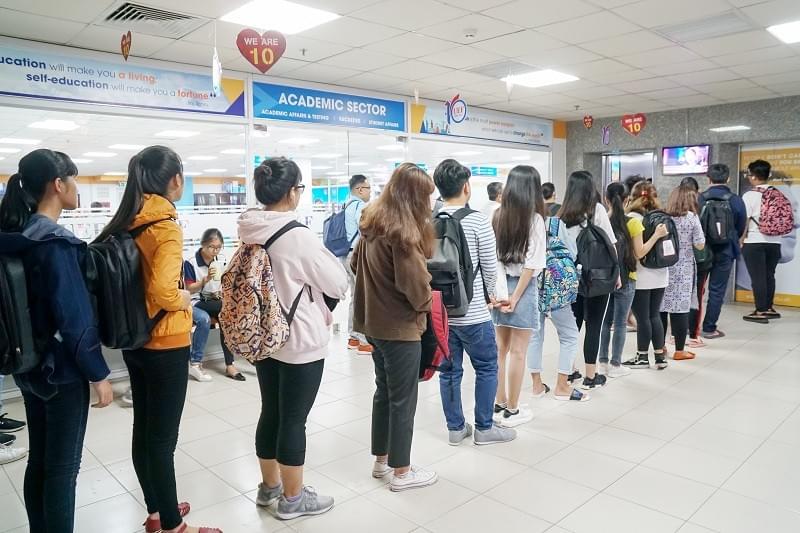
Normal sighting of UEF university students queuing up for the elevator during classes. Photo: UEF
I tried to arrive early, partly because I wanted to be prepared and partly because I wanted to make sure I could sit near an electrical outlet so my laptop would not die halfway through the day. That kind of detail may seem small, but it says a lot about student life here. Being a university student in Ho Chi Minh City often means learning how to move with the city, not around it.
Why So Much Student Life Happens in Cafés
A normal day usually meant class, lunch, and then a decision: go home, meet friends, or continue working somewhere else. If there was no assignment, I would often head home. But if there was a group project, the day usually continued at a café or in the library.
Cafés are a major part of student life in Ho Chi Minh City, but they serve a purpose that goes beyond studying. Many students live with their families, while others rent small rooms or shared accommodations near campus. As a result, cafés provide a valuable third space between home and university. They are places where students can meet friends, work on presentations, charge devices, prepare for exams, and spend long hours completing assignments.
For many students, cafés are simply the most practical place to get work done. During busy periods, it is common to see students arriving early to secure a table, especially one near an electrical outlet. Some cafés offer comfortable seating, reliable internet access, and food or drinks that make it easier to stay for several hours. When deadlines approach, many of us spend more time in cafés and libraries than we do at home.
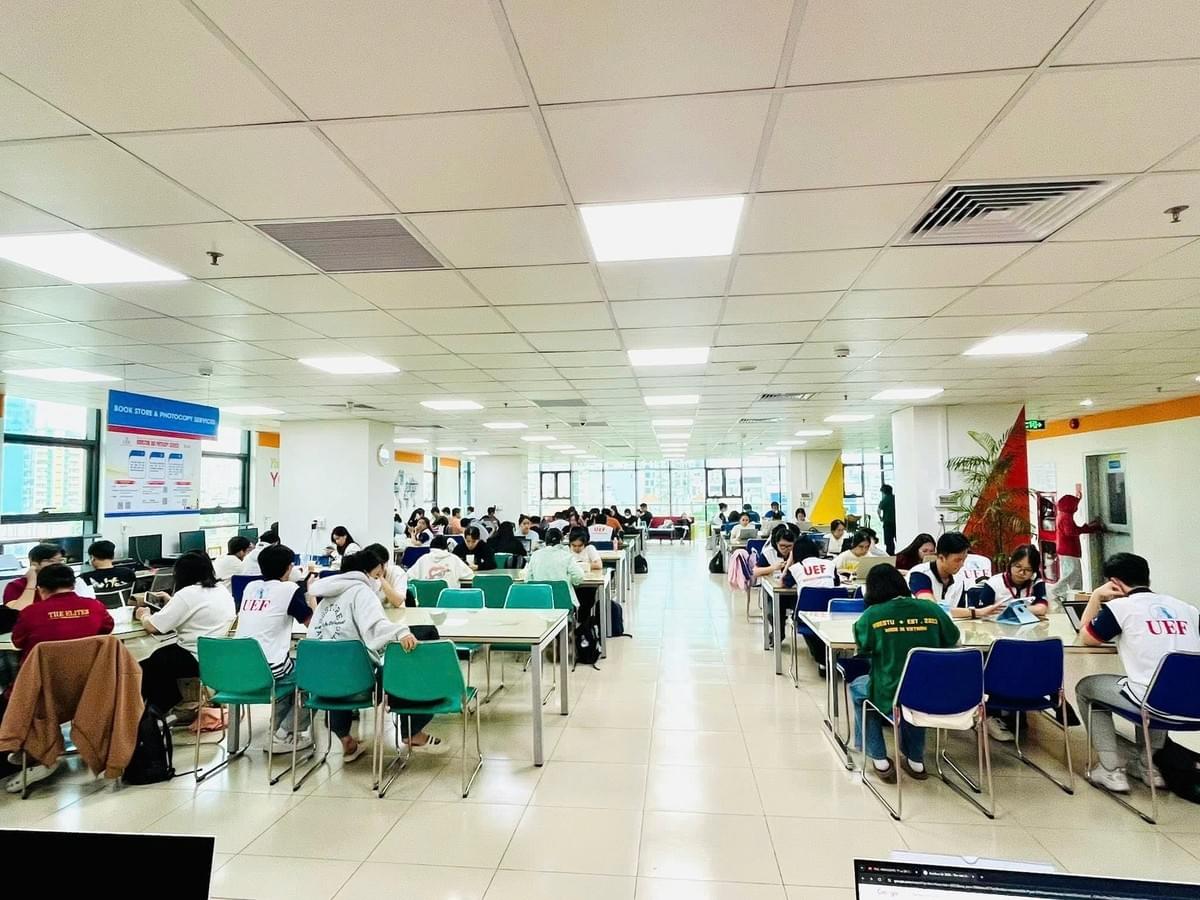
The library during the school’s assignments season. Photo: UEF
Group assignments are a big part of university life, and they often determine where and how students spend their time. If everyone is free after class, the group goes straight to a café. If not, the meeting gets pushed to another time, either in person or online depending on everyone’s availability. University quickly teaches you that group work is not only about completing assignments. It is also about learning how to coordinate schedules, collaborate effectively, and work with different personalities.
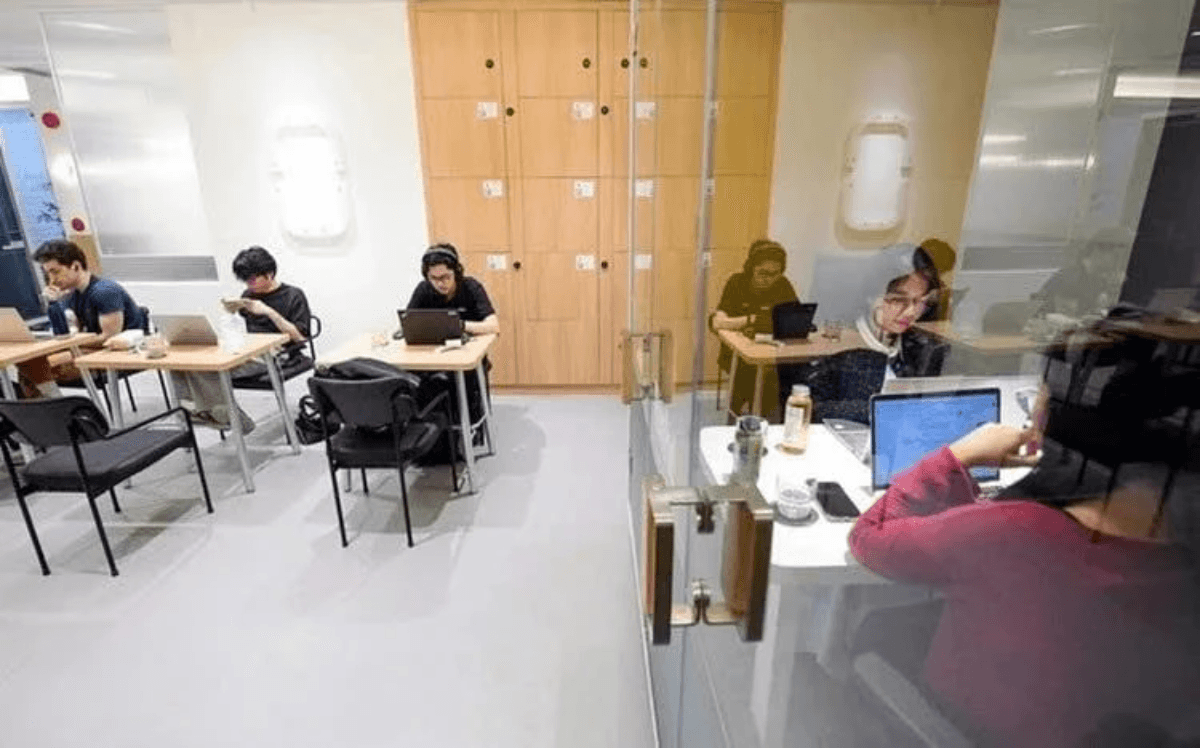
At nights, when libraries are closed, cafes opening 24/7 will be our go-to place during assignment season. Photo: Quang Dinh/Tuoi Tre
Social life looks different from the Hollywood version
Outside class, student life is social in a different way from the American campus image people often imagine. There are no big football-game weekends in the way American universities are portrayed on screen. Instead, social life tends to revolve around food, birthdays, group chats, and spontaneous plans that depend on everyone’s schedule.
If it is someone's birthday, students will often gather for a small celebration with cake, food, and drinks. Sometimes the plan comes together only a few hours beforehand through a group chat. Other times, friends meet up simply because everyone happens to be free at the same time. Since many students commute and live in different parts of the city, social plans often require a bit of coordination.
Sports also play a role, but in a different form. Soccer is much more popular than American-style football, and basketball also has a strong following among students. One of my favorite university memories was watching Chelsea matches with friends. Sometimes we would stay up until three or four in the morning following Premier League games, then still show up for class a few hours later. It was exhausting, but it felt completely normal at the time. Looking back, those late nights are some of the memories I remember most clearly from university.
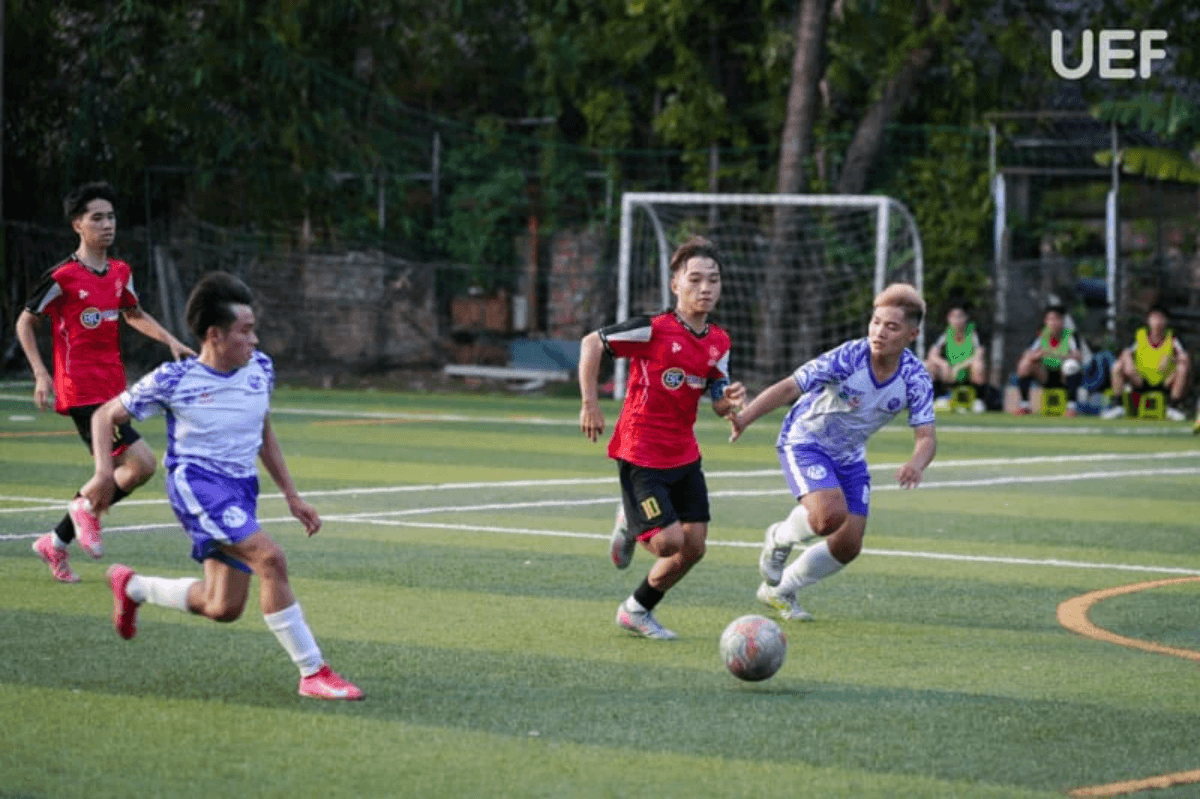
A soccer match during the annual Olympic UEF hosted by UEF for faculties. Photo: UEF
Students think about careers early
By the third year of university, many students were already thinking seriously about jobs and internships. Grades were always important, but career pressure slowly became part of everyday conversation. In my case, studying International Relations in Vietnam also meant recognizing that the major was quite specialized and not always connected to a straightforward career path. That made the future feel both exciting and uncertain.
At UEF, one of the most important parts of the final year was a required internship, which most students needed to complete in order to graduate. While some students with a sufficiently high GPA could choose to write a final research thesis instead, the majority completed a three-month placement at a company or organization.
The internship was not simply a work experience opportunity. Students were evaluated by their supervisors throughout the placement and, upon completion, had to submit both an official performance evaluation and a final paper reflecting on what they learned in practice. In many ways, it served as a bridge between university and professional life.
For international readers, particularly those familiar with the American university system, this may be one of the more notable differences. Rather than being an optional résumé-building activity, internships were built directly into the degree itself and formed an important part of the graduation process.
Looking back
Looking back, what stands out to me most about university life in Ho Chi Minh City is how closely it is connected to the city itself. Unlike the university experiences often portrayed in American movies, student life was not centered on a single campus. Instead, it unfolded across classrooms, cafés, libraries, apartment buildings, side streets, and countless daily commutes through the city.
In many ways, my university experience was shaped as much by Ho Chi Minh City as it was by UEF. The city influenced where I studied, where I met friends, how I completed group projects, and even how I spent my free time. A typical university day did not begin and end on campus. It continued in cafés, on busy streets, and in the countless places where students gathered to study, socialize, and prepare for the future.
UEF was where I earned my degree, but Ho Chi Minh City was where much of my university life actually happened. Looking back, that is what I remember most clearly. My university experience was not defined by football stadiums, dormitories, or campus traditions. It was defined by the energy of a city that never seemed to slow down and the people who were navigating it alongside me.

Jermaine Trinh is a Vietnamese writer and international affairs professional based in Ho Chi Minh City. A graduate in International Relations from the University of Economics and Finance, his writing explores public diplomacy, cross-cultural exchange, and international cooperation in the Asia-Pacific. He has contributed to public diplomacy initiatives at the U.S. Consulate General Ho Chi Minh City, supported healthcare outreach programs with the VinaCapital Foundation, worked with international humanitarian teams through the ACTV medical mission — an annual French-Vietnamese healthcare exchange program. Jermaine is passionate about making international affairs more accessible by connecting policy, culture, and everyday experiences across the region.
Sponsored: Your international university journey, personalized
ARP Education provides one-to-one guidance for students and families exploring undergraduate and master’s study in the United States, United Kingdom, Canada, Australia, China, and international universities in Vietnam.
We help students compare destinations, build a university list that fits their goals and profile, develop a strong holistic application, and create a strategy to maximize scholarship opportunities.
Learn more or get in touch → ARP Education
Website: arpeducation.com | Email: info@arpeducation.com
Zalo & WhatsApp: (+84) 354 127 782